Macro Scholar: Crypto is Accelerating Changes in the Global Economy
Original author: Tascha Che, founder of Tascha Labs
Original compilation: 0x137, Rhythm BlockBeats
This article is based on the views of Tascha Che, the founder of Tascha Labs, on his personal social media platform, Rhythm BlockBeats organizes and translates it as follows:
What the hell is money? What impact will crypto have on it? Here are some of my views:
There are more currencies in the world today than at any time in history - 164 national currencies, plus gold, silver, certificates of deposit, repurchase securities , treasury bills, and many other quasi-currencies. If we regard various encrypted Tokens as currencies, then the types of currencies are actually in the stage of explosive growth.
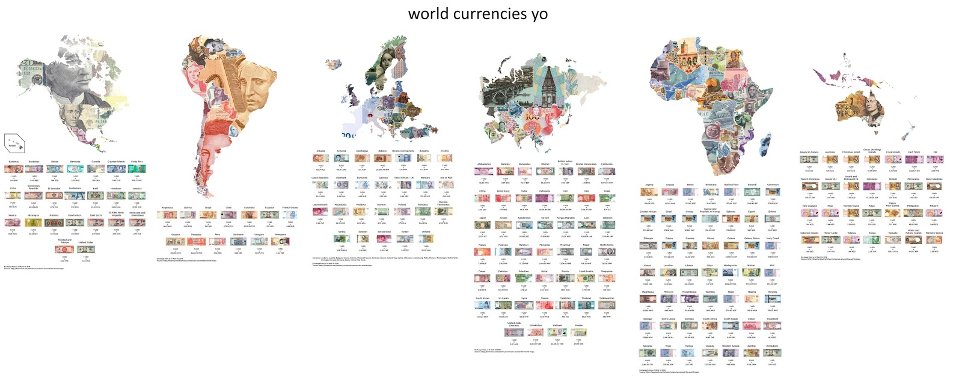
The concept of money is changing dramatically . Before talking about where it's going in the future, let's take a look at how it became what people know it today.
There are 3 perspectives on what money is that I find particularly helpful:
1. Money is a technology that facilitates large-scale economic cooperation
Money is actually a tool for transactions between strangers. Money is useless in a Mesopotamian village where all 50 people are related by blood.
So transactions in microeconomics usually operate in the form of a "gift" system: today you give your cousin 5 apples, and tomorrow he gives you 5 peaches , and the social graph you share maintains reciprocity and fairness through trust in each other.
But when you trade with people from distant villages, money suddenly becomes useful. Because there is not only no trust between you, and you may never see each other again, then the currency can operate as a neutral, real-time value exchange database.
This is why your sister would rather you give her a useless pair of "heatable slippers" for Christmas than slip her a $50 banknotes, because subconsciously, our genes are still telling us that "money" is equivalent to strangers.
As long as you and the stranger both agree to use the same "money", it can be used to track value and settle trustless transactions problems, such as gold, copper rods, clothes, shells, etc.
From this perspective it is easy to see that money is both an outcome and a driver of business expansion - the more we deal with strangers, the more we need it, Because of this, money in a broad sense expanded dramatically in the post-war era of globalization of production and commerce.
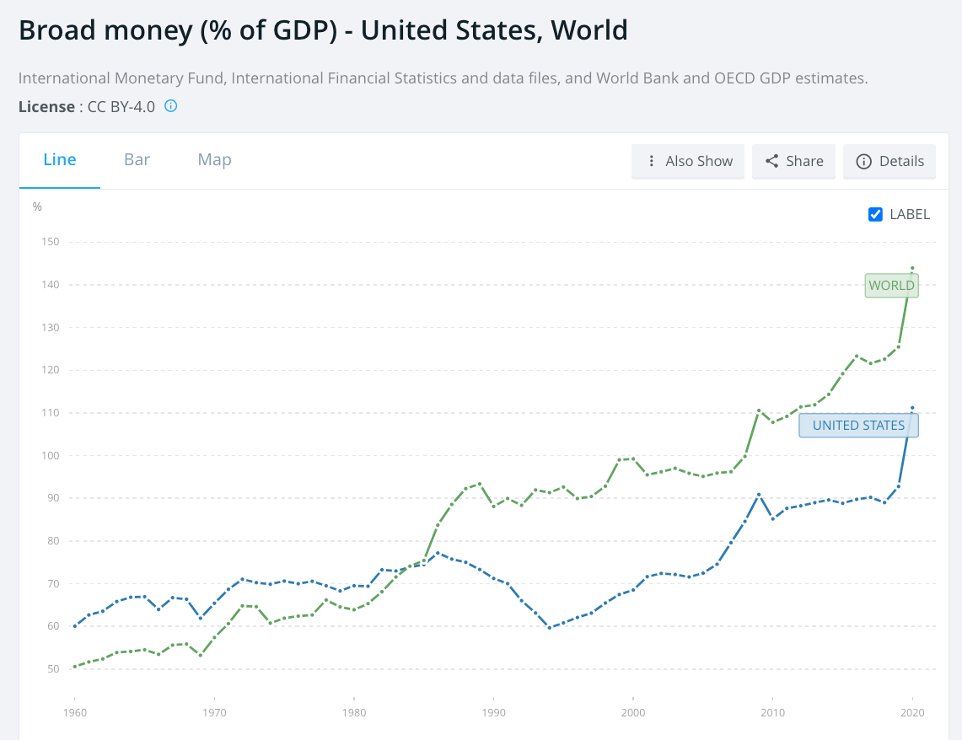
Since the 1960s, the money supply has grown from 50% of GDP to over 140%, reflecting the world's strong demand for money. That number is at least double when various forms of quasi-currency are included.
Nevertheless, the scope of cooperation between strangers Still limited by the scope of social consensus on the concept of "money" - if the two parties in the transaction cannot agree on which money should be used to represent the value amount of the transaction, the cooperation will fail.
In the past, getting different "villages" to agree to use the same type of money was an almost impossible political challenge, exemplified by the euro. But the borderless blockchain Token seems to achieve this feat effortlessly, which I will elaborate on below.
2. Money is an effective credit tracking system
In the modern economy, the relationship between money and credit has become like air and wind—to create credit is to create money. But that's not always the case.
At the end of the day, credit is just a delay mechanism that allows value to be exchanged. In simple economies, the concept of credit doesn't need money to exist, and members of small societies can keep a close eye on each other and extend credit to each other, like you can on credit at your local bakery, pub, and butcher.
This was the original form of credit that we now call supplier financing.
The problem with a credit system like this is that it doesn't scale - each provider has to operate separate credit databases that don't communicate with each other, and individual The credit score is also divided and limited.
And money is like a hormone for credit, an entity called a "bank" can bring together most of the loanable A resource that not only allows credit from different sources to be shared and swapped for the same units, but also eliminates the need for borrowers to transact with numerous creditors. This allows people to create larger, faster credits with lower transaction costs.
From this perspective it is easy to see that the entities most in need of credit will also be the biggest proponents of the "universalization" of money, especially if they are at the same time controlling the money supply when the party.
Who are these entities? That's right, Governments.
Modern paper money as we know it began with the creation of the Bank of England 300 years ago as a way to help Britain finance wars with France. Of course, every crypto project now focuses on those privileges that were once only official, that is, the democratization of finance.
Officials are usually the largest borrowers in an economy, so the rapid growth of broad money over the past few decades has also been accompanied by a large increase in official borrowing...< /p>
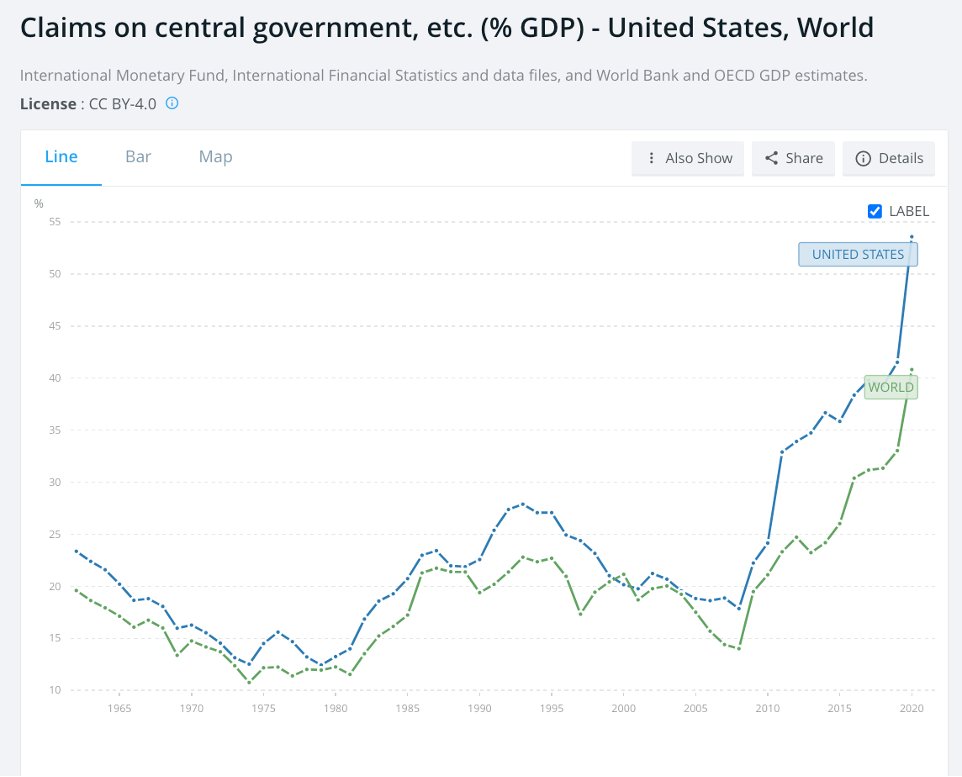
If you think the curve in the above picture has risen a lot , then adding a country like Japan to the mix can give you a better picture of what's really going on...

At the same time, credit to the private sector has also increased a lot, but it is still relatively small compared to the official, especially since the 90s.
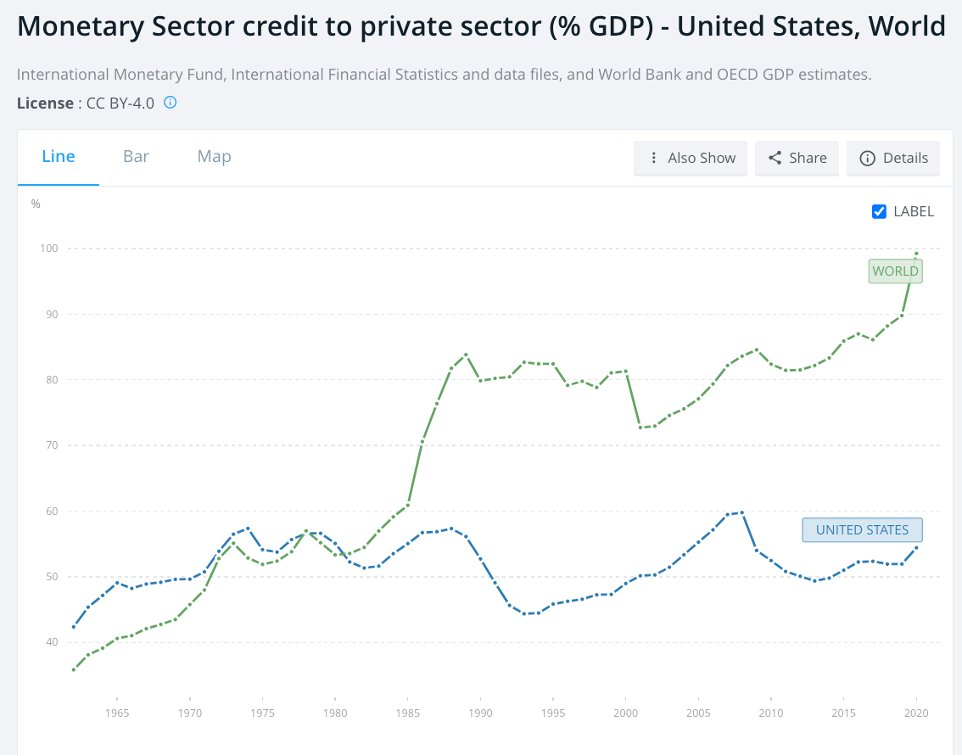
How sustainable is global credit growth Leaving aside the topic, my point is that money is the key enabler of credit creation on a large scale, and without it we would not have a global market economy on the scale we have today.
As private crypto tokens and other digital assets become more like money, the global money supply will only grow further. What this means for credit growth seems obvious.
3. Money is an unexercised right to economic output
"Unexercised" is the key word here, most of us believe that "money equals purchasing power" i.e. it gets you out of the economic pie of society Get a piece of the action. But on the whole, this point of view is not entirely tenable.
As we just said, the world stock of broad money accounts for more than 140% of world GDP. This means that we would not have enough GDP to cover all demand, assuming that all holders of money around the world "cashed out" at once in exchange for goods and services.
In other words, the world values its purchasing power 40% more than it actually does. We have been overestimating our purchasing power since 2008, when the money supply was above 100% of GDP.
Before you yell "ponzi scheme" or "evil governments print too much money" we are actually more likely to be witnessing a war between money and The transformation of the nature of credit will only accelerate with the process of Tokenization.
So with these three views of money in mind, how should we think about the way blockchain changes money, credit, and the economy ?
There are several possibilities to be aware of:
1. Higher money supply
When assets are liquid and easily traded, they become quasi-money. And the blockchain makes a large number of assets more liquid, so the "candidates" for quasi-money have grown significantly, and the de facto money supply has also surged accordingly.
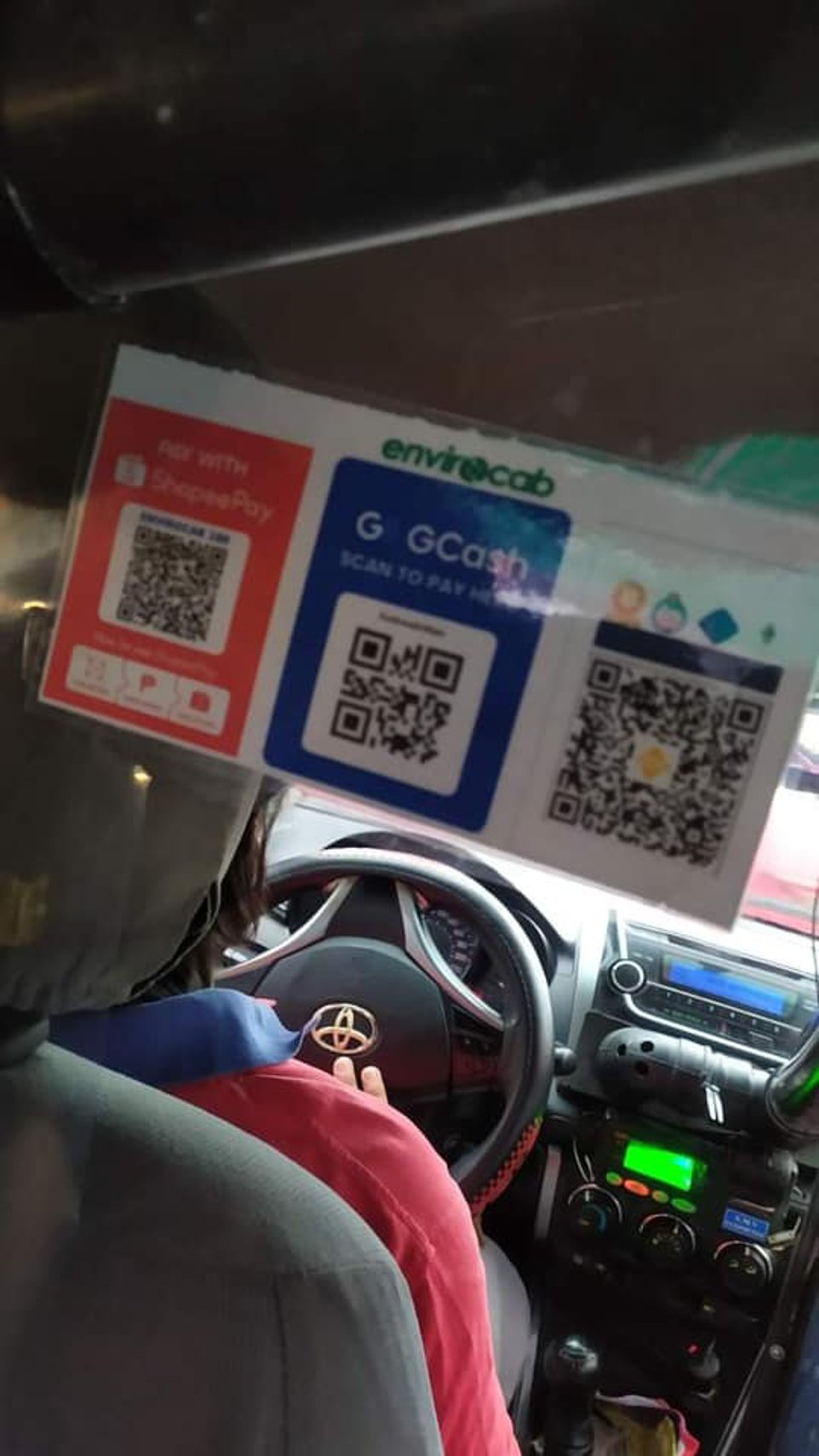
The picture below is a photo sent to me by a Filipino friend. You can now use BTC, ETH, SLP and other Tokens to pay taxi drivers. You know, this is just the beginning.
2. 更高的信用和债务,但more dispersed
We already live in a world where everyone is both a debtor and a creditor, and everyone owes each other something more or less.
Using blockchain, one can get a loan in seconds and easily manage collateral on-chain, which will lead to both credit and debt levels new heights.
At the same time, the distribution of debt will also change. The rich take on more debt, while the poor have no collateral. By tokenizing everything, everyone can stake something on-chain, and the massive democratization of credit and debt is possible.
We are likely to see total economic output in the accounting sense far exceed economic output in the real sense, while the boom and bust of the credit cycle will more frequent and intense. But hopefully based on it all being managed on-chain, the cycle of the debt cycle will also be completed faster.
3. Inflation will no longer be stable
With the influx of "private quasi-currency", it will be more difficult for officials to monitor the total supply of money and the actual inflation rate.
In the long run, demographic changes and productivity gains brought about by high technology can reduce inflation, but the growing money supply will still be the reason for this powerful counterforce.
4. Global economic cooperation promoted by borderless currency
Money allows trustless cooperation between strangers. If money has no national boundaries, the scope of cooperation in production activities will also be the same.
Due to structural changes in supply chains and geopolitics, the globalization of the real economy is likely to shrink in the next two years. But the opposite happens in the digital economy, where cryptocurrencies can reduce the cost of cross-border transactions to zero, and the metaverse means globalization on the largest scale.
5. More synchronized global business cycles
This is a direct result of global economic cooperation, a digital economy without borders means that no matter where you are, you will share the same business cycle. As the share of digital assets in the overall economy grows, the business cycles of real countries will also become more synchronized.
Original link
Welcome to join the official BlockBeats community:
Telegram Subscription Group: https://t.me/theblockbeats
Telegram Discussion Group: https://t.me/BlockBeats_App
Official Twitter Account: https://twitter.com/BlockBeatsAsia

 Related Articles